
MSG – A solution to maintain deliciousness of salt-reduced diet


Besides its effects to make food tastier, scientific studies proved that MSG is effective in maintaining low-salt diet, thereby brings numerous health benefits to human.
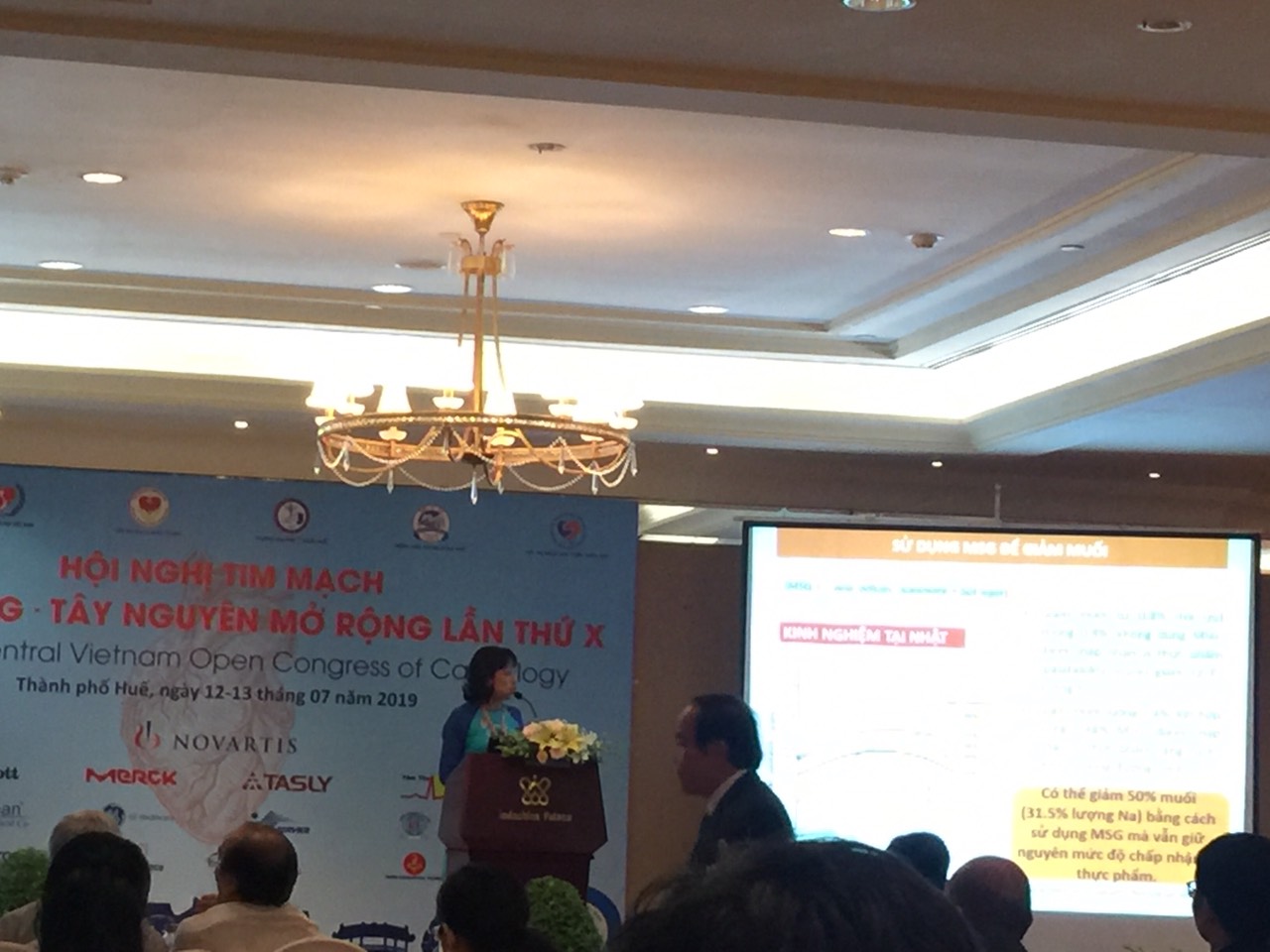

On July 12th-13th 2019, in Hue, the Central and Tay Nguyen Heart Association cooperated with Hue University of Medicine and Pharmacy to organize “The 10th Central – Tay Nguyen Open Congress of Cardiology” with the topic “Cardiology and challenges in comprehensive access and community connection”. There were more than 800 professors, associate professors, doctors, leading cardiovascular experts nationwide, along with 15 cardiovascular experts from the United States, Belgium, China, Japan, Cuba and Malaysia attending the congress.
During the congress, hypertension was one of the topics receiving a lot of attention and ebullient discussion from participants, as hypertension is a major risk factor for cardiovascular diseases and stroke. One of the leading causes of hypertension is consuming too much salt in the diet.
MSG – A solution to maintain deliciousness of salt-reduced diet
A challenge of reducing salt in the diet is the impact on food’s taste, so it is extremely important to make a salt-reduced diet while not significantly sacrificing the taste of food to maintain the diet in long-term period, for the prevention and treatment of cardiovascular and other related diseases
In the presentation named “Solution to maintain salt-reduced diets effectively”, PhD. MD. Tran Thi Minh Hanh – Head of Department of Nutrition and Dietetics, Hoan My Sai Gon Hospital raised the solution of using umami seasoning – MSG to maintain the deliciousness of salt-reduced diet effectively.
Besides its main function of intensifying umami taste (the meaty, savory taste) for food, making food’s taste harmonious, whereby contributing to improve people’s quality of life, MSG is demonstrated and proved to have many other physiological and nutritional functions, including the maintenance of palatability of low-salt food and salt-reduced diets.
A study by Yamaguchi in 1984 showed that using MSG in appropriate combination with salt could reduce up to 50% of salt and 31.5% of sodium intake while maintaining the desired flavor and taste acceptability of food. Other studies implemented in the US, Finland and Malaysia gave similar results.
The method of reducing salt consumption while keeping deliciousness by combining salt and MSG was mentioned as an effective and practical solution by numerous governments and regulatory & scientific agencies around the world. In the US, since 2010, the Salt Reduction Strategy Committee of the American Academy of Sciences has recommended the use of MSG in salt-reduced diets. In Vietnam, Ministry of Health's "Guidelines for Clinical nutrition" published in 2015 also recommended “The use of MSG at reasonable level (on average 0.4 - 0.5%) to enhance the flavor of low-salt food and support patients in maintaining well their clinical diets”.
MSG is a seasoning with a long-standing history. It was invented in 1908 by a Japanese professor, Dr. Kikunae Ikeda, leading to the birth of the world's first umami seasoning - AJI-NO-MOTO produced by Ajinomoto Group in 1909, following the aspiration of improving the nutrition of Japanese people at that time through delicious food.
Besides, MSG is one of the most researched food additives. Conclusions of governments and regulatory & scientific agencies around the world such as JECFA (The Joint FAO/WHO Expert Committee on Food Additives), the US Food and Drug Administration (US FDA), etc. proved that MSG is safe to be used for human as a food additive with acceptable daily intake “not specified” (daily intake depends on each kind of food and each individual’s taste). In Vietnam, the Ministry of Health places MSG in the "List of additives permitted for use in food".
Thus, reasonable use of salt in the diet to prevent cardiovascular diseases was recommended by experts and health agencies in context of high consumption of salt in Vietnam and the world, closely relating to the increase of the risk of cardiovascular diseases in the community. A proposed solution is to combine MSG and salt in the diet to maintain the taste of food with a significantly lower salt and sodium levels while keeping the deliciousness .
This presentation helps doctors, cardiologists and dieticians/nutritionists capture the knowledge and apply MSG to reduce dietary salt for patients. Simultaneously, through doctors and experts, this information will be shared widely to the community and general public, towards diets that help prevent chronic diseases for healthy people.